

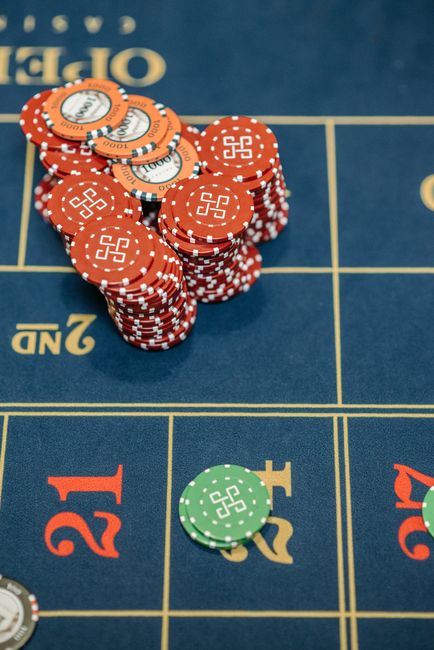
Every gambler remembers their first big win. Maybe it was a $2 slot spin that turned into $400, or a parlay that somehow survived a last-second touchdown. That rush is real, and it's exactly why the iGaming industry is worth north of $100 billion globally. But here's the thing nobody tells you on that first winning night: the house edge doesn't care about your feelings. It grinds away, spin after spin, hand after hand, until the math catches up with almost everyone who plays long enough.
That's not a reason to avoid the casino. It's a reason to understand it. The players who actually last — the ones who treat this as entertainment with a budget rather than a get-rich scheme — are the ones who know how the games work, where the value hides, and when to walk away. Let's break down what that actually looks like across slots, table games, poker and sports betting.
Understanding the House Edge (And Why It's Not the Enemy)
The house edge is simply the percentage of every dollar wagered that the casino expects to keep over the long run. It's not a fee charged per bet, and it doesn't mean you'll lose exactly 4% every session. Over millions of spins, though, the numbers converge — and that's how casinos pay for the lights, the staff, and the free drinks.
Here's a rough comparison of typical edges across popular games:
- Blackjack (basic strategy): 0.5% or lower — one of the best bets in the building if you play well
- Baccarat (banker bet): about 1.06% — boring, but brutally efficient
- Craps (pass line with odds): under 1% with full odds behind the line
- European roulette: 2.7% — the single zero makes a big difference versus American's 5.26%
- Slots: typically 2% to 10%, sometimes higher
- Keno and lottery-style games: often 20% to 35%
Notice the pattern? Games where skill and decision-making matter tend to have lower edges. Games that are pure chance with big advertised jackpots tend to have the worst. That's not a coincidence — it's the trade-off between excitement and expected value.
Slots: The Real Story Behind the Reels
Slots are the undisputed king of the casino floor, generating the majority of revenue for most operators. Modern video slots are marvels of engineering — animated intros, cascading reels, buy-bonus features and volatility profiles tuned to appeal to different player types. But underneath all that polish, every spin is determined by a random number generator running millions of calculations per second. More background can be found at 58winn.co.com.
A few things worth knowing:
- Volatility matters more than you think. A low-volatility slot pays small amounts often. A high-volatility slot might go 200 spins without a meaningful hit, then drop a 500x bonus. Neither is "better" — they just suit different temperaments and bankrolls.
- RTP is a long-run average. A 96% RTP game doesn't owe you 96 cents back per dollar today. It means that over billions of spins, the machine returns 96 cents per dollar wagered. Your session might be wildly above or below that.
- Buy-bonus features aren't a shortcut. Paying 100x your bet for a bonus round is mathematically equivalent to triggering it naturally, just faster and with more variance.
The smartest slot players I know set a session limit, pick games with RTPs they've actually looked up (casino review sites publish these), and treat a big win as a bonus rather than a target.
Poker: The One Game Where You Can Beat the House
Poker is different from every other casino game. You're not playing against the house — you're playing against other players, and the house just takes a rake. That means a skilled player can genuinely have a positive expected value over time. It also means the money flows from the worse players to the better ones, and the rake makes the whole ecosystem slightly harder to beat.
If you're serious about poker, a few fundamentals do most of the heavy lifting:
- Position is king. Acting last gives you more information and more options. A weak hand in late position is often more playable than a strong hand in early position.
- Play tighter than you think. Beginners lose money by playing too many hands. Folding is free; calling isn't.
- Track your results. Use a hand history tool or at least a simple spreadsheet. Memory is a liar — you remember the bad beats and forget the lucky rivers.
- Bankroll management is non-negotiable. A common guideline is at least 20 buy-ins for cash games and 50 to 100 for tournaments. If you're under-rolled, variance will end you before skill can save you.
The gap between an average player and a strong one is enormous in poker. But closing that gap takes study, patience, and a lot of hands. There's no shortcut around the grind.
Sports Betting: Line Shopping and the 5% That Matters
If you bet on sports casually, one habit separates sharp bettors from recreational ones: line shopping. The same game might be priced at -3.5 (-110) at one sportsbook and -3.0 (-105) at another. That half-point and five cents of juice seem trivial. They're not. Over hundreds of bets, those small differences are often the entire margin between profit and loss.
Beyond shopping, three concepts are worth internalizing:
- Implied probability. Odds of -110 mean the book thinks the outcome has a 52.4% chance. If you believe it's actually 55%, that's value. If you believe it's 50%, you're losing money.
- Closing line value (CLV). Did you get a better price than the closing line? Consistently beating the close is one of the strongest signals that you're actually a sharp bettor — far more reliable than short-term win/loss records.
- Specialization. The best bettors in the world focus on one or two leagues. You can't out-research a full-time oddsmaker who covers 12 sports; you might beat them on one.
The Bankroll and Mindset Rules Nobody Follows
You can know every statistic in this article and still lose your shirt if you ignore two things: bankroll management and emotional control. The casino doesn't beat smart players — it beats impatient ones.
Set a monthly gambling budget that you'd be genuinely fine losing, separate from rent, savings and bills. Treat it as the cost of entertainment, equivalent to what you'd spend on concert tickets or a nice dinner. When it's gone, stop. And if you ever find yourself chasing losses, that's the moment to close the laptop and take a real break — not because you're weak, but because the math is now working against you in a way it wasn't before.
One more thing: winners don't always cash out, but smart winners do. Locking in a profit after a good run is one of the most underrated skills in gambling.
The Long Game
iGaming isn't a puzzle to be solved, and nobody is beating the house edge at roulette over 10,000 spins. But you can absolutely be a net winner in the areas where skill matters — poker, sports betting with real analysis, and blackjack played with discipline. Everywhere else, your job is to manage the cost of fun intelligently.
The players who understand that distinction last longer, enjoy it more, and yes, walk away with more of their money intact. The house always wins in the long run — unless you know exactly where you're allowed to win with it.


Coding is used in almost all aspects of life and work now, be it directly or indirectly. It’s not just for companies in the tech sector. “An increasing number of businesses rely on computer code,
Coding is used in almost all aspects of life and work now, be it directly or indirectly. It’s not just for companies in the tech sector. “An increasing number of businesses rely on computer code,
Coding is used in almost all aspects of life and work now, be it directly or indirectly. It’s not just for companies in the tech sector. “An increasing number of businesses rely on computer code,